Crossing Borders with a Rental Car: Uganda to Rwanda Guide
Crossing borders with a rental car is one of the most underused options in East African travel — and one of the most rewarding. Instead of flying between Kigali and Entebbe and losing a day to airport logistics, you can drive your own 4×4 from Bwindi’s gorillas straight into Volcanoes National Park, or loop through Uganda, Rwanda, and Kenya on a single set of wheels. The catch is that crossing borders with a rental car isn’t automatic — it requires a rental company that explicitly authorizes cross-border travel, a specific stack of paperwork, and a realistic understanding of how each border post actually operates.
This guide walks through exactly what’s involved in cross border car rental in Uganda, Rwanda, Kenya & Tanzania and routes that turn a single-country trip into a full East African road trip. If you’ve already read up on our Uganda self-drive options, this is the piece that connects them to our Rwanda services and shows how a one-way or loop itinerary across both countries actually comes together.
Can You Just Drive a Rental Car Across the Border?
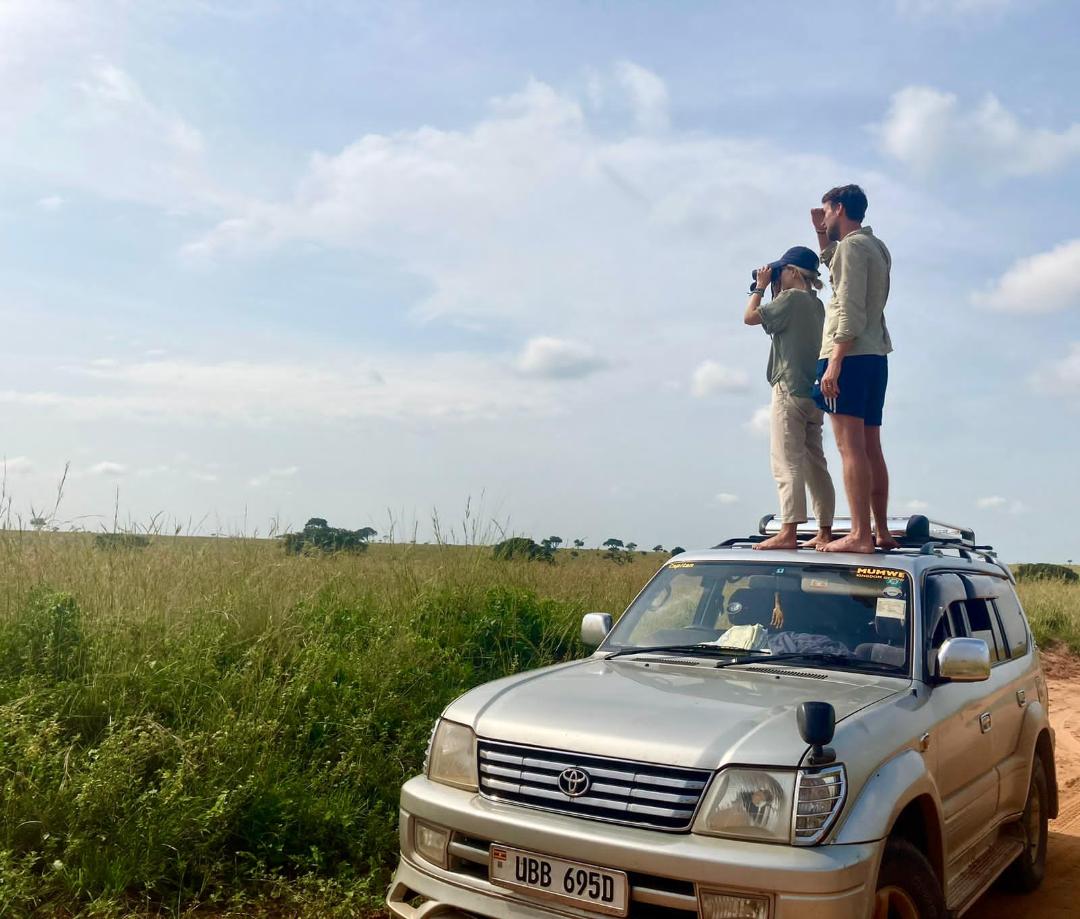
No — not with a standard rental agreement. Crossing borders with a rental car only works when the hire company has specifically approved that vehicle for export, in writing, before you leave. Most local rental agreements in Uganda and Rwanda are valid for domestic use only by default. Cross-border travel is an add-on that has to be arranged when you book, not something you can improvise at the checkpoint. Expect a modest surcharge on top of the daily rate — typically a flat cross-border processing fee plus the cost of the required insurance extension — and expect to request it several working days ahead, since the paperwork below has to be prepared in advance.
Documents You Need
Crossing borders with a rental car in East Africa means carrying a specific folder of paperwork every time you approach a checkpoint. Missing any one item can stall you at the gate even if everything else is in order, because immigration, customs, and traffic police each check a different piece of it.
- Letter of Authority — issued and stamped by the rental company, explicitly naming the vehicle and travel dates it’s approved to leave the country of registration. This is the single most important document; without it, officials will not let the vehicle through regardless of what else you’re carrying.
- COMESA Yellow Card — the regional third-party motor insurance scheme recognized across Uganda, Rwanda, Kenya, Burundi, and the DRC. Tanzania sits outside COMESA formally but honors the Yellow Card under reciprocal border arrangements, so carry it on Tanzania routes too. Without a valid Yellow Card, a vehicle has no insurance cover the moment it leaves its home country and simply isn’t permitted across. Budget roughly $50–70 depending on the operator and coverage period, and request it at least three to five working days before departure.
- Vehicle logbook / registration — an original or certified copy, matched by customs against the chassis and engine numbers on the physical vehicle.
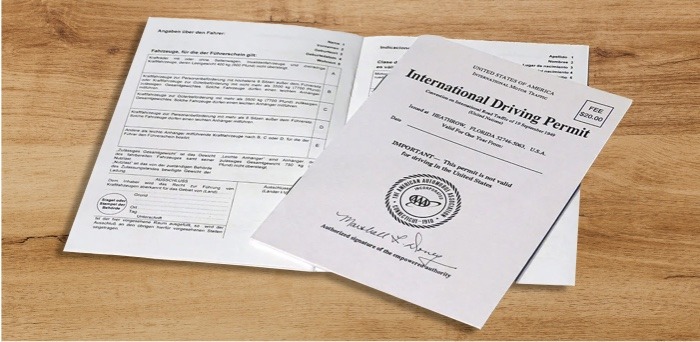
- International Driving Permit (IDP), carried alongside your home driving license.
- Passport valid for at least six months, plus the correct visa: the East Africa Tourist Visa ($100) covers multiple entries into Uganda, Rwanda, and Kenya for 90 days and is the most efficient option for any Uganda-Rwanda-Kenya loop. Tanzania sits outside this visa and requires its own entry visa or e-Visa (around $50).
- Yellow Fever vaccination certificate — mandatory for entry across all four countries.
- Reflective safety stickers (front and rear) — required under East African Community vehicle standards and checked at some crossings.
Keep everything as physical printed copies. Border officials at every post in the region inspect documents by hand, and a phone screen is not a reliable substitute if signal or battery fails.
Insurance: What COMESA Actually Covers
Standard rental insurance in Uganda or Rwanda typically stops at the border. The COMESA Yellow Card is what extends third-party liability cover across member states, and it’s the document that customs checks on both exit and re-entry. It does not replace comprehensive cover on the vehicle itself — collision damage, theft, and windscreen cover remain governed by your original rental agreement, so confirm before departure whether that cover still applies once you’re outside the country of registration. Reputable cross-border operators bundle the Yellow Card into the rental package; if a company quotes you a cross-border rate without mentioning it, ask directly before booking.
Uganda ↔ Rwanda Border Posts: Katuna, Cyanika & Mirama Hills
Three land crossings handle nearly all self-drive traffic between Uganda and Rwanda, and which one you use depends on your Bwindi trekking sector or your route through Kigali.
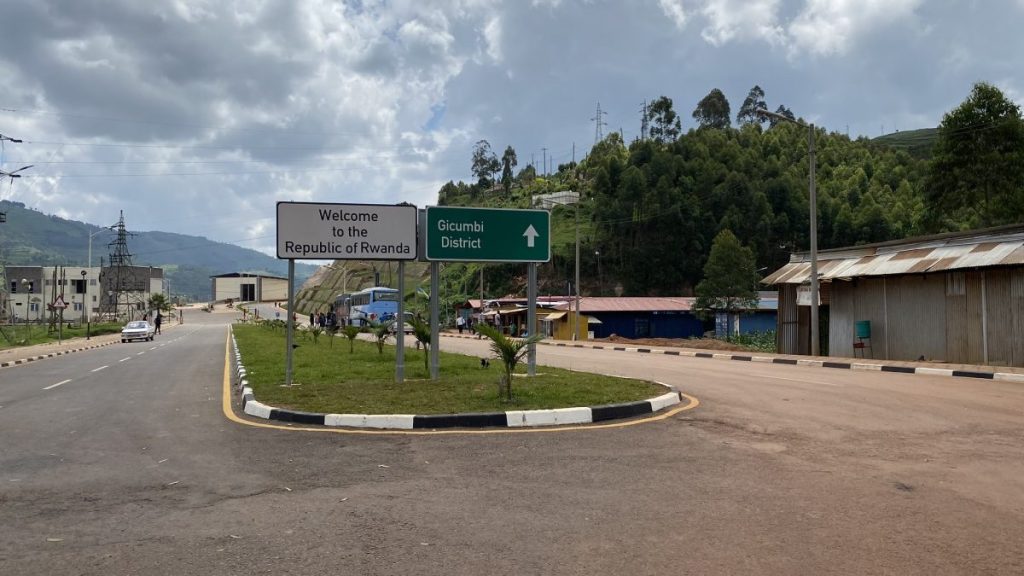
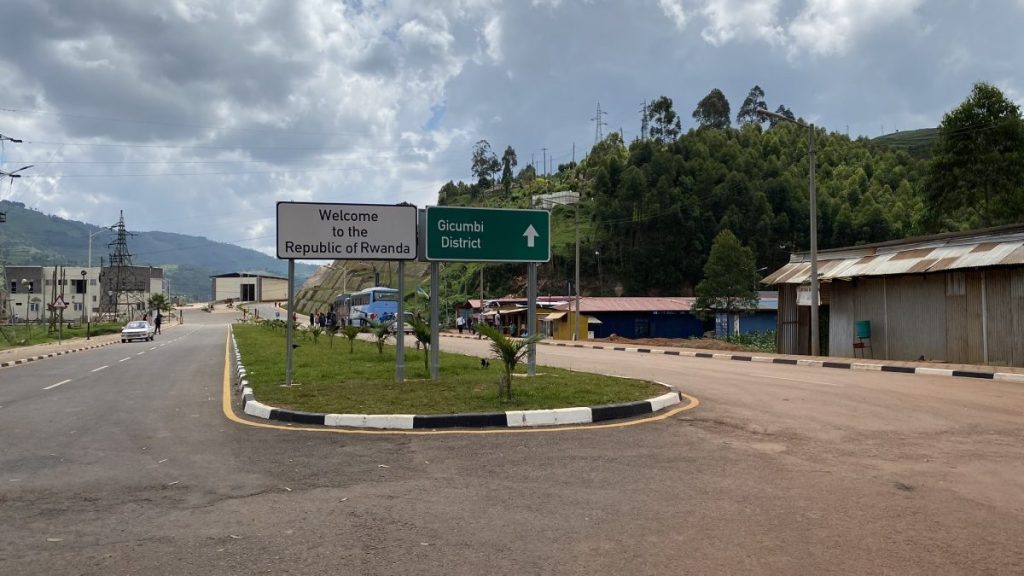
Katuna (Uganda side) / Gatuna (Rwanda side) — the busiest of the three, located in Kabale district (Uganda) and Gicumbi district (Rwanda), roughly 7–8 hours from Kampala and about 3 hours from Kigali. It’s a modernized One Stop Border Post open 24 hours a day, and the main route for travelers heading to Bwindi’s Ruhija or Buhoma sectors. Heavy commercial truck traffic means it can be slower at peak hours, but tourist vehicles are generally given priority.
Cyanika (Uganda side) / Kyanika (Rwanda side) — quieter, more scenic, and the preferred crossing for Bwindi’s Rushaga and Nkuringo sectors, as well as Mgahinga Gorilla National Park. Unlike Katuna, Cyanika is not open 24 hours: the Uganda side runs roughly 6:00 am to 9:00 pm, and the Rwanda side 5:00 am to 8:00 pm (Rwanda is one hour behind Uganda, so double-check the local time on each side before you plan a late crossing).
Kagitumba (Rwanda side) / Mirama Hills (Uganda side) — located in Ntungamo district in southwestern Uganda, this is the third main crossing and has operated 24 hours a day since 2018. It’s less used by tourists than Katuna or Cyanika but is a practical option if your route runs further east.
At any of the three, expect the process to take 30–60 minutes at quieter times and 1–2 hours during peak periods at Katuna. Park in the designated vehicle area, switch off the engine, and complete passport/immigration formalities before customs checks the vehicle documents. Arriving early in the day minimizes waiting time at every post.
Uganda ↔ Kenya: Busia and Malaba
If your loop extends toward the Maasai Mara or Nairobi, Busia and Malaba are the two main land posts, both full-time checkpoints on well-maintained tarmac roads. Kampala to Busia is roughly 195 km, generally a 3–4 hour drive through Jinja and Iganga. The same document set applies — Letter of Authority, COMESA Yellow Card, logbook, IDP, and visa — with the added note that Kenya’s own electronic travel authorization requirements should be confirmed before travel, separately from the East Africa Tourist Visa.
Uganda ↔ Tanzania: Mutukula
For routes continuing south toward Rwanda’s Rusumo crossing or into northern Tanzania, Mutukula is the standard post. Tanzania is not a COMESA member but recognizes the Yellow Card reciprocally at this crossing, so carry it regardless. Tanzania requires its own visa (not covered by the East Africa Tourist Visa), and foreign-registered vehicles are typically granted a limited number of free days in-country before a temporary import extension fee applies — budget roughly $20–45 if your Tanzania leg runs longer than about a week.
Extra Fees to Budget For
Beyond the daily rental rate, crossing borders with a rental car carries several additional costs worth budgeting for up front:
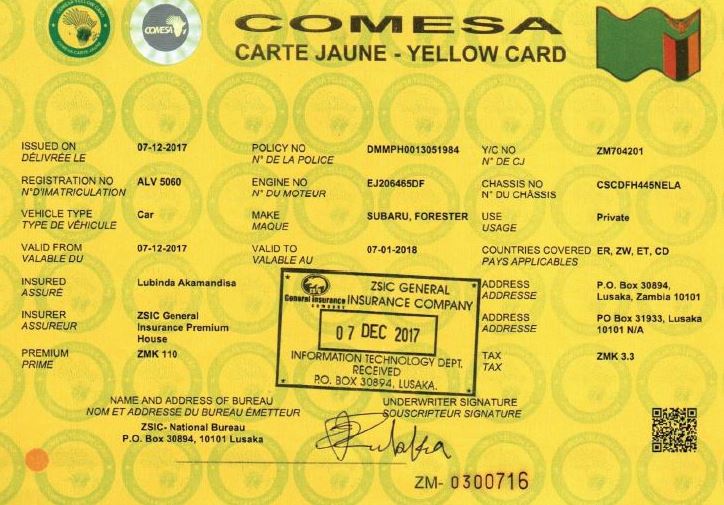
- COMESA Yellow Card: roughly $50–70
- Cross-border processing / one-way fee: varies by operator and route, typically charged as a flat administration fee on top of the daily rate
- Temporary vehicle import extension (if staying beyond the free allowance in a given country): roughly $20–45, most relevant on longer Tanzania legs
- Non-local park entry surcharge: some countries charge foreign-registered vehicles a higher park entry rate than locally registered ones — confirm this per park if your itinerary includes multiple countries’ national parks
- Visa costs: $100 for the East Africa Tourist Visa (Uganda-Rwanda-Kenya), plus a separate Tanzania visa if your route extends there
Vehicle Requirements
Not every rental vehicle is approved for export, and not every vehicle is suited to the roads on the other side. Confirm before booking that:
- The specific vehicle (not just the rental class) is named on the Letter of Authority — approval doesn’t transfer automatically if the company swaps your car.
- It’s a genuine 4×4 with adequate clearance — Rwanda’s roads are excellent and mostly sealed, but Uganda’s rural and park roads regularly turn to mud, dust, or deep ruts.
- Reflective front and rear stickers are fitted, per East African Community standards.
- The fuel tank policy is understood before departure — most cross-border rentals expect a full tank at return, and fuel quality and availability vary once you’re off the main highways.
- Recovery and breakdown assistance is confirmed as valid outside the country of registration, since standard roadside assistance sometimes stops at the border even when the insurance itself extends further.
Recommended One-Way and Loop Itineraries
One-way: Entebbe → Kigali (gorillas both sides) Start in Uganda’s Bwindi Impenetrable Forest for a mountain gorilla trek at $800 per person, cross at Cyanika toward the Rushaga or Nkuringo sectors, then continue into Rwanda’s Volcanoes National Park for a second trek if desired. Dropping the vehicle in Kigali instead of driving back to Entebbe is the most efficient way to combine both countries’ gorilla experiences without doubling back over the same roads.
Loop: Entebbe → Bwindi → Volcanoes NP → Lake Kivu → back via Katuna → Entebbe A 10–12 day loop that crosses at Cyanika heading into Rwanda and returns via Katuna, giving you two different border experiences and a wider look at southwestern Uganda and northern Rwanda on the return leg. This works well as an extension of a standard Uganda self-drive itinerary rather than a separate trip.
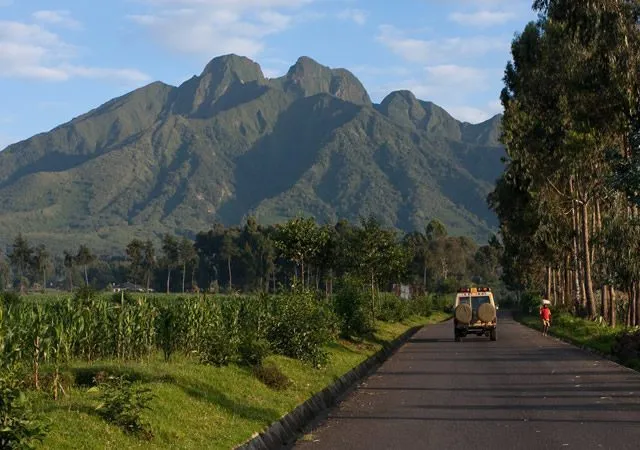
Extended loop: Entebbe → Uganda parks → Katuna to Kigali → Busia/Malaba back into Kenya → Nairobi/Maasai Mara For travelers with three weeks or more, this combines Uganda’s parks, Rwanda’s gorillas, and Kenya’s Maasai Mara on a single vehicle, using the East Africa Tourist Visa to avoid repeated visa costs. This is the most document-intensive of the three routes and benefits most from a rental company experienced in multi-border logistics.
Plan Your Cross-Border Route
Crossing borders with a rental car turns Uganda and Rwanda from two separate trips into one continuous road trip — and with the right documents, insurance, and border post chosen for your route, the crossing itself is a 30-to-90-minute formality rather than an obstacle. Since we already handle self-drive logistics on both sides of the Katuna and Cyanika borders, get in touch before you book to confirm your Letter of Authority, COMESA cover, and the border post that best matches your Bwindi trekking sector — and start planning the one-way or loop route that fits your trip.
Book a rental car and driver in Uganda for a safe and comfortable cross-border road trip across East Africa – contact us today by sending an email to info@rentadriveruganda.com or call us now on +256-700135510.