Why Uganda Safaris Involve More Driving Than You Might Expect
Uganda is often marketed as “the Pearl of Africa,” and first-time visitors picture a compact country where parks sit close together like they do in parts of South Africa or Kenya’s Maasai Mara circuit. The reality is different. Uganda’s national parks are spread across the far north, the west, and the southwest, separated by hills, forests, and roads that don’t move fast. Most Uganda safari itineraries end up involving significantly more time behind the wheel than people expect — and understanding why helps you plan a trip that actually enjoys the driving instead of fighting it.
Uganda’s Parks Are Far Apart By Design
Unlike Kenya or Tanzania, where several major parks and reserves cluster within a few hours of each other, Uganda’s key wildlife areas are deliberately scattered across very different ecosystems:
- Murchison Falls National Park — savanna and the Nile, in the north
- Kibale Forest National Park — chimpanzee tracking, in the west
- Queen Elizabeth National Park — savanna, crater lakes, and the Kazinga Channel, in the southwest
- Bwindi Impenetrable National Park — gorilla trekking, tucked against the Rwenzori/Virunga highlands in the extreme southwest
- Kidepo Valley National Park — remote savanna in the far northeast, near South Sudan
These parks exist where they do because Uganda’s wildlife habitats follow the country’s geography — savanna in the north and west, montane forest in the southwest, semi-arid plains in the northeast. That diversity is exactly what makes a Uganda safari so rewarding, but it also means the “classic circuit” isn’t a tight loop — it’s a long diagonal sweep across the country.
The Math: Distances Add Up Fast
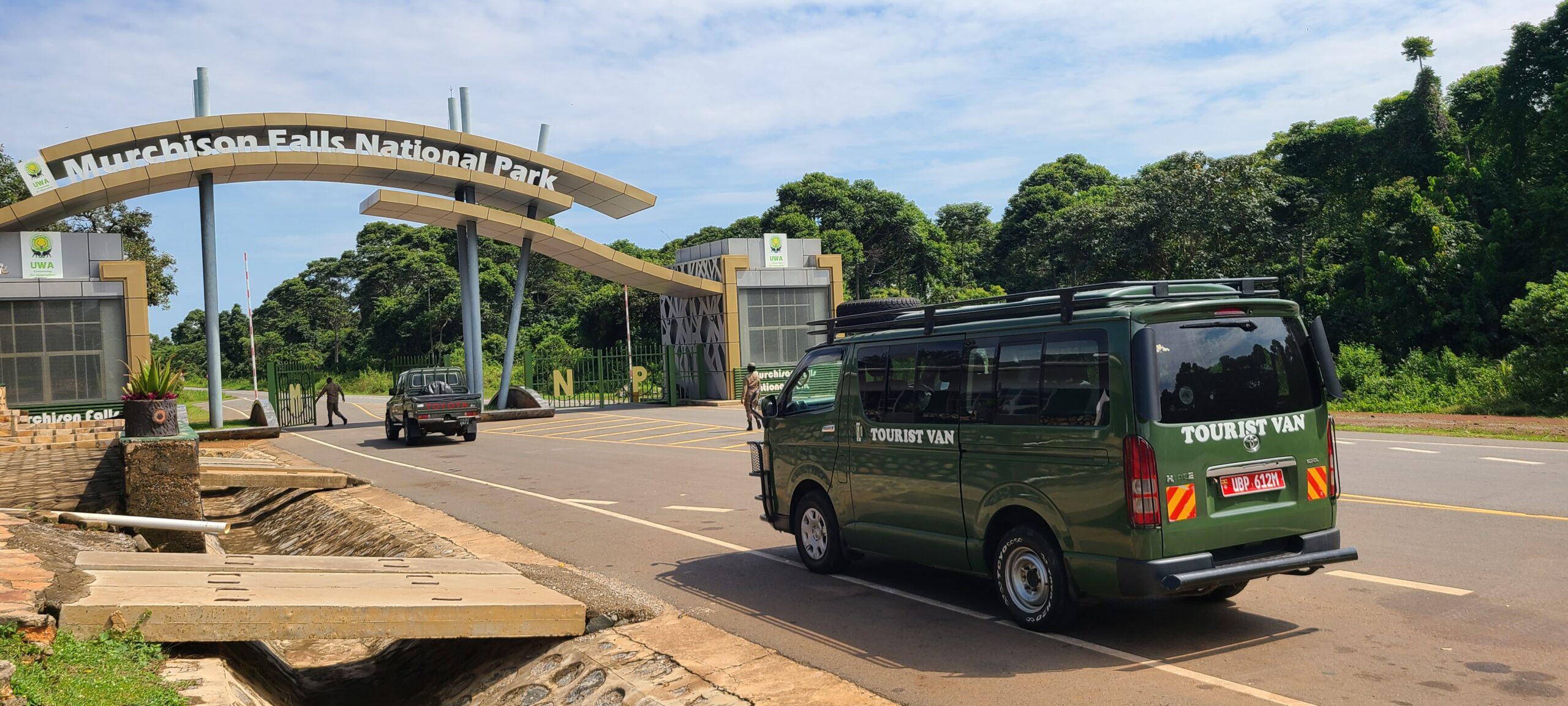
A typical 8–10 day circuit covering Murchison Falls, Kibale, Queen Elizabeth, and Bwindi looks like this:
| Leg | Approx. Distance | Approx. Drive Time |
|---|---|---|
| Entebbe/Kampala → Murchison Falls NP | 280–310 km | 5–6 hours |
| Murchison Falls → Kibale Forest | 300–330 km | 6–7 hours |
| Kibale Forest → Queen Elizabeth NP | 40–70 km | 1–1.5 hours |
| Queen Elizabeth → Bwindi Impenetrable NP | 130–170 km | 3–4 hours |
| Bwindi → Lake Mburo NP | 260–300 km | 5–6 hours |
| Lake Mburo → Entebbe/Kampala | 230–260 km | 4–5 hours |
| Total | ≈ 1,250–1,440 km | ≈ 24–30 hours |
That’s before adding a single game drive. On top of the inter-park transfers, expect several more hours a day driving inside the parks themselves — tracking along Murchison’s Buligi circuit, cruising Kasenyi plains or the Ishasha sector in Queen Elizabeth for tree-climbing lions, or navigating the steep switchbacks around Bwindi’s ridges to reach a trailhead. Add Kidepo to the itinerary and you’re looking at another full day of driving each way, since it sits roughly 570 km from Kampala with no shortcuts.
Why the Roads Themselves Slow You Down
Distance on a map doesn’t tell the whole story — road conditions are the bigger factor in Uganda:
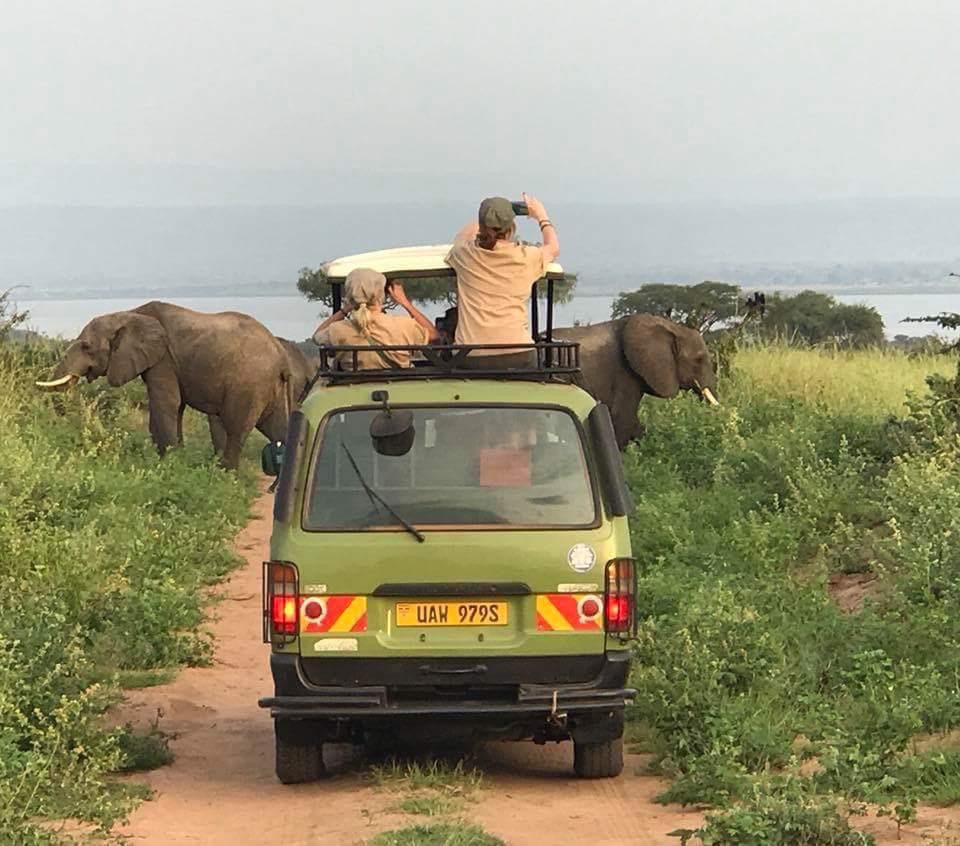
- Murram (dirt/gravel) roads connect most parks to the nearest tarmac highway, and speeds of 30–50 km/h are normal and safer than pushing faster.
- Hilly, winding terrain dominates the southwest — the road into Bwindi in particular climbs and descends continuously, which is slow but scenic.
- Rain changes everything. During the wet seasons (March–May and September–November), murram roads turn slick and travel times can stretch well beyond dry-season estimates.
- Shared roads with local traffic — boda bodas, livestock, market trucks, and pedestrians — mean lower average speeds than a similar distance would take on an empty highway elsewhere.
- In-park speed limits (usually 25–40 km/h) are strictly enforced for animal safety, and rightly so — this is where most of your best sightings happen anyway.
None of this is a flaw in the experience; it’s part of what keeps these parks wild and undeveloped. But it does mean a 300 km transfer can reasonably take 6 hours, not the 3 hours the same distance might take on a European or American highway.
Why Most Itineraries Underestimate This
A lot of the driving-time confusion comes from how safaris get planned:
- Google Maps driving times assume tarmac speeds. They’re often accurate for the highway portions but don’t account for murram sections, checkpoints, or in-park driving.
- Brochures list “park to park” distances, not the actual door-to-door time including lodge access roads, fuel stops, and border-post-style ranger check-ins at park gates.
- First-time visitors try to fit too many parks into too few days, not realizing that Uganda rewards fewer stops with more time at each, rather than a fast-paced tour of everywhere at once.
How to Plan Around It (Instead of Being Surprised by It)
- Budget realistic drive days. Treat any 250+ km inter-park transfer as a half-day activity in itself, not something squeezed in before an afternoon activity.
- Break up the longest legs. Splitting Kampala–Murchison or Bwindi–Lake Mburo with an overnight stop (Ziwa Rhino Sanctuary and Igongo Cultural Centre are popular waypoints) turns a grueling drive into two enjoyable ones.
- Prioritize fewer parks, done properly. Three well-chosen parks over 8 days almost always beats five parks crammed into the same trip.
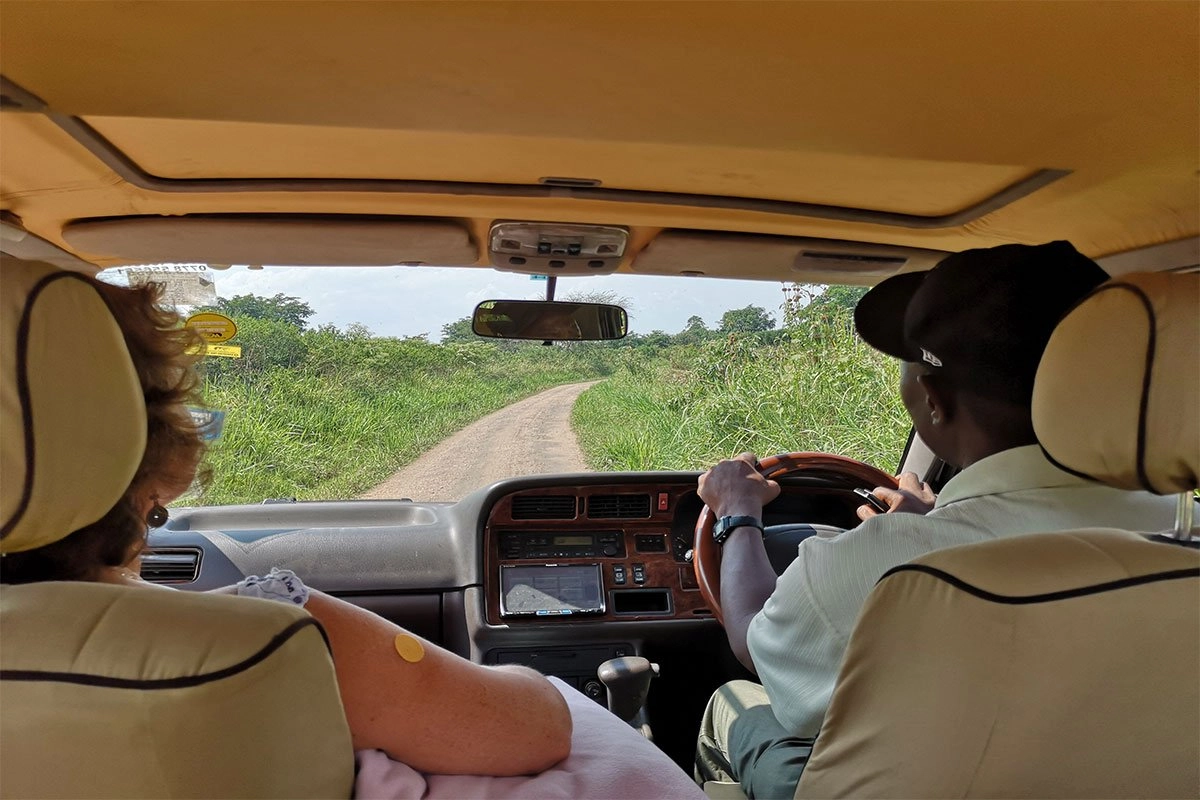
- Hire a driver-guide if it’s your first time. Beyond fuel savings, a local driver knows current road conditions, shortcuts, and realistic timings far better than any app.
- Build in buffer time, especially during the rainy seasons, for road conditions and unexpected delays.
The Upside: The Driving Is Part of the Safari
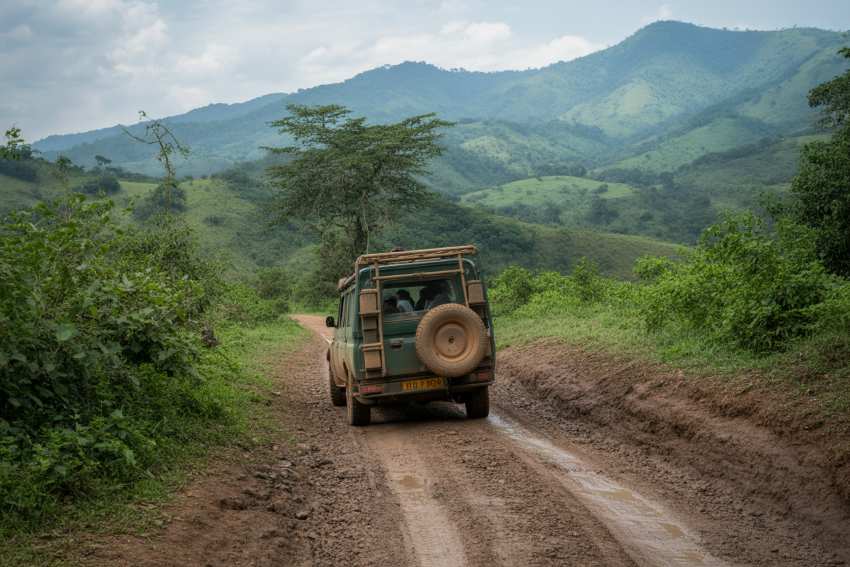
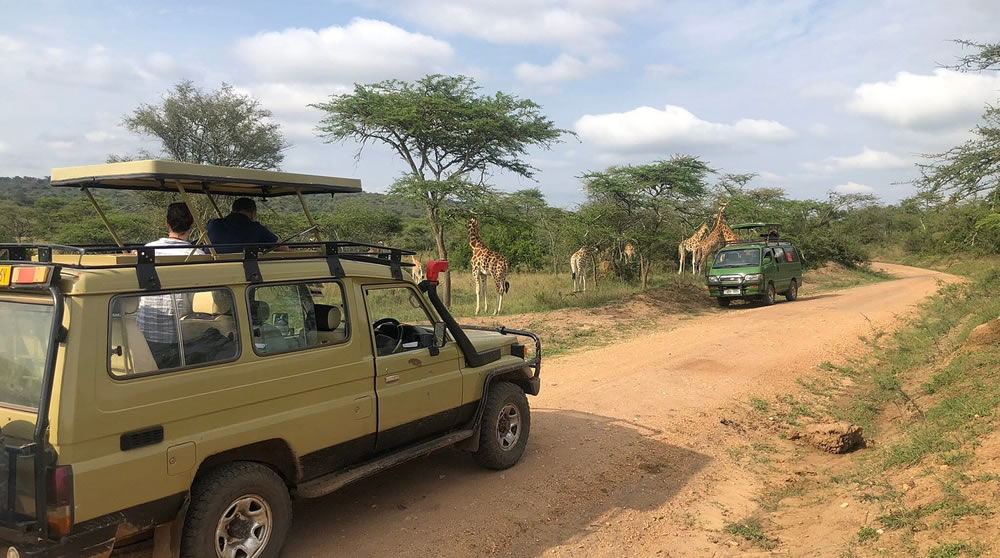
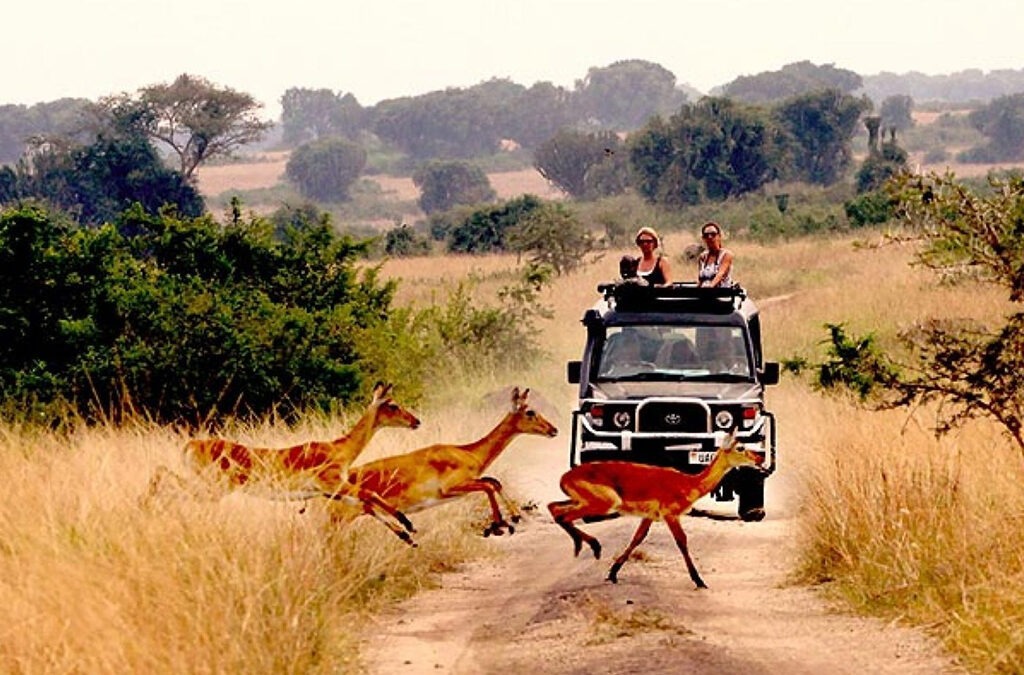
Unlike destinations where transfers are a means to an end, Uganda’s road network takes you through tea plantations near Fort Portal, along the Rift Valley escarpment overlooking Queen Elizabeth, and through terraced hillsides on the way into Bwindi. Wildlife sightings — elephants crossing the road, baboons at the roadside, birds everywhere — often happen between parks, not just inside them. Travellers who plan for the driving instead of trying to minimize it tend to come away saying the transfers were some of the most memorable parts of the trip.
Final Take
Uganda safaris involve more driving than many people expect because the parks are genuinely far apart, the roads are unpaved and hilly for long stretches, and in-park driving adds hours beyond the transfers themselves. The fix isn’t to avoid driving — it’s to plan for it realistically, choose fewer parks if your time is limited, and pick a reliable 4×4 built for the terrain.
At Rent A Driver Uganda, we help travelers build realistic, well-paced itineraries and match them with the right 4×4 for the distances and road conditions ahead — so the driving becomes part of the adventure, not an obstacle to it.