A Driver-Guide’s Silent Language of Ugandan Roads Explained
How Drivers Read Hand Signals, Horns, and Headlights Across Borders
Spend a few hours on any major road in East Africa and you’ll notice something that never makes it into a driving manual: a constant, wordless conversation happening between vehicles. A flash of headlights. Two short horn taps. A hand extended out a window, palm down, waving low. None of it is random. It’s a language — unwritten, regional, and essential — and the drivers who know it fluently are the ones keeping you safe on the road without you ever realizing a conversation took place.
Why This Language Exists at All
Official traffic signs cover the basics: speed limits, junctions, pedestrian crossings. What they don’t cover is everything that happens between those fixed points — a truck driver warning oncoming traffic about a police checkpoint ahead, a matatu signaling it’s about to stop without warning, a boda boda rider indicating he’s about to cut across three lanes because that’s simply how the road works. Roads across Uganda, Kenya, Rwanda, and Tanzania carry a mix of speeds, vehicle types, and driving cultures that formal rules were never designed to fully address. The signal language filled that gap, and it’s been refined by generations of drivers who needed a faster, more nuanced way to communicate than a mirror check and a prayer.
Headlights: The Long-Distance Warning System
On highways connecting Kampala to the parks, or Nairobi to the coast, headlight flashes are doing more work than most travelers assume:

Headlight flickers
- A single flash from an oncoming vehicle often means “there’s a hazard ahead” — a pothole, an accident, livestock on the road, or a checkpoint.
- Repeated flashing can mean “slow down now,” used when a driver spots danger the other car hasn’t seen yet.
- A flash paired with a wave to pull over frequently signals a police checkpoint further down the road, an informal courtesy passed between strangers who will likely never meet again.
Experienced driver-guides read these signals instinctively and adjust speed or route before a passenger even notices anything happened.
Horns: Not Aggression, Communication
Visitors from Europe or North America often assume that frequent honking signals frustration. Across much of East Africa, it’s closer to the opposite — a horn is a tool for making your presence known in places where mirrors and blind spots simply aren’t enough.
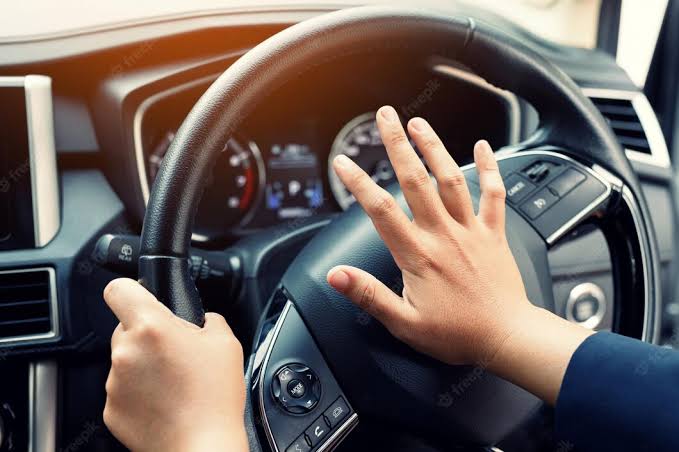
- A short tap before overtaking tells the vehicle ahead, “I’m passing you now.”
- A longer horn near a blind bend warns any oncoming traffic that a vehicle is approaching on a narrow mountain road, common on routes through places like the Kigezi highlands.
- A double tap approaching a market or trading center alerts pedestrians and cyclists that a vehicle is coming through.
None of this is rudeness. It’s closer to the maritime tradition of ships sounding horns in fog — a way of saying “I’m here” long before eye contact is possible.
Hand Signals: The Most Personal Layer
Where headlights and horns handle distance, hand signals manage the close-up, moment-to-moment negotiations of shared road space.

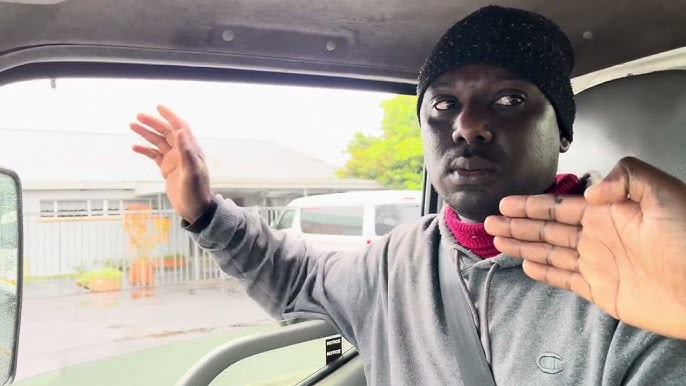
- A palm waved low and flat, out the window, often means “slow down” or “wait,” used by drivers letting someone merge or cross.
- A finger pointed toward the roadside can indicate a hazard just ahead — sometimes an accident, sometimes simply a spot where the tarmac gives way to a pothole minefield.
- A raised hand from a traffic officer or driver at an intersection frequently substitutes for a working traffic light in towns where the infrastructure hasn’t caught up with the traffic volume.
Boda boda riders, who navigate the tightest gaps in any given traffic jam, rely on this hand-signal layer constantly, since a horn alone can’t convey which direction they intend to weave next.
The Signals Change at Every Border
Part of what makes this language so fascinating is how locally specific it is. A gesture that means “clear to pass” on a Ugandan highway might carry a slightly different meaning on a Kenyan or Tanzanian one. Truck drivers running long-haul routes across the region — Mombasa to Kampala, or Kampala to Kigali — often describe having to “re-calibrate” their reading of the road every time they cross a border, the same way a sailor adjusts to different maritime signal conventions from one coastline to the next.
This is one of the quieter reasons a local driver-guide is worth far more than a rental car and a map. GPS & Google Maps can tell you the route. They cannot tell you what a flashing headlight two kilometers ahead actually means, or translate the hand signal from the truck about to pass you on a blind corner.
A Language Best Learned by Riding, Not Reading
No manual fully captures this system, because it isn’t really a fixed code — it’s a living convention, adjusted constantly by the drivers using it. The best way to understand it is to watch it happen from the passenger seat of someone fluent in it, someone who can translate a flash of lights or a wave of the hand into exactly what it means for your journey.
That’s ultimately the quiet skill baked into every good driver-guide in Uganda: they’re not just navigating roads, they’re reading a constant stream of signals most passengers never even notice, and using that fluency to keep the trip smooth, safe, and — most of the time — silent.