Uganda Safari Packing List: What Most Tourists Forget
You have booked your gorilla trekking permit, confirmed your lodge reservations, and mapped out your route through Uganda’s finest national parks. Your excitement is building — and rightly so. A Uganda safari is one of the most extraordinary travel experiences anywhere in the world. But as departure day approaches, one critical question remains: have you actually packed everything you need?
Most travelers heading to Uganda for the first time focus on the obvious essentials — passport, tickets, camera — and overlook a surprisingly long list of items that make an enormous difference in the field. At Rent A Driver Uganda, we watch tourists arrive every season under-prepared for Uganda’s unique terrain, climate, and wildlife environments. The result is discomfort, missed opportunities, and in some cases, genuine inconvenience in locations where the nearest shop is hours away.
This guide covers the Uganda safari packing list that most tourists forget — the items that experienced travellers swear by and first-timers wish they had brought.
Clothing: It Is More Specific Than You Think
Most tourists pack generically for “Africa” without considering Uganda’s specific environments. Uganda straddles the equator but its altitude and dense forests create cool, wet conditions that catch many visitors completely off guard.
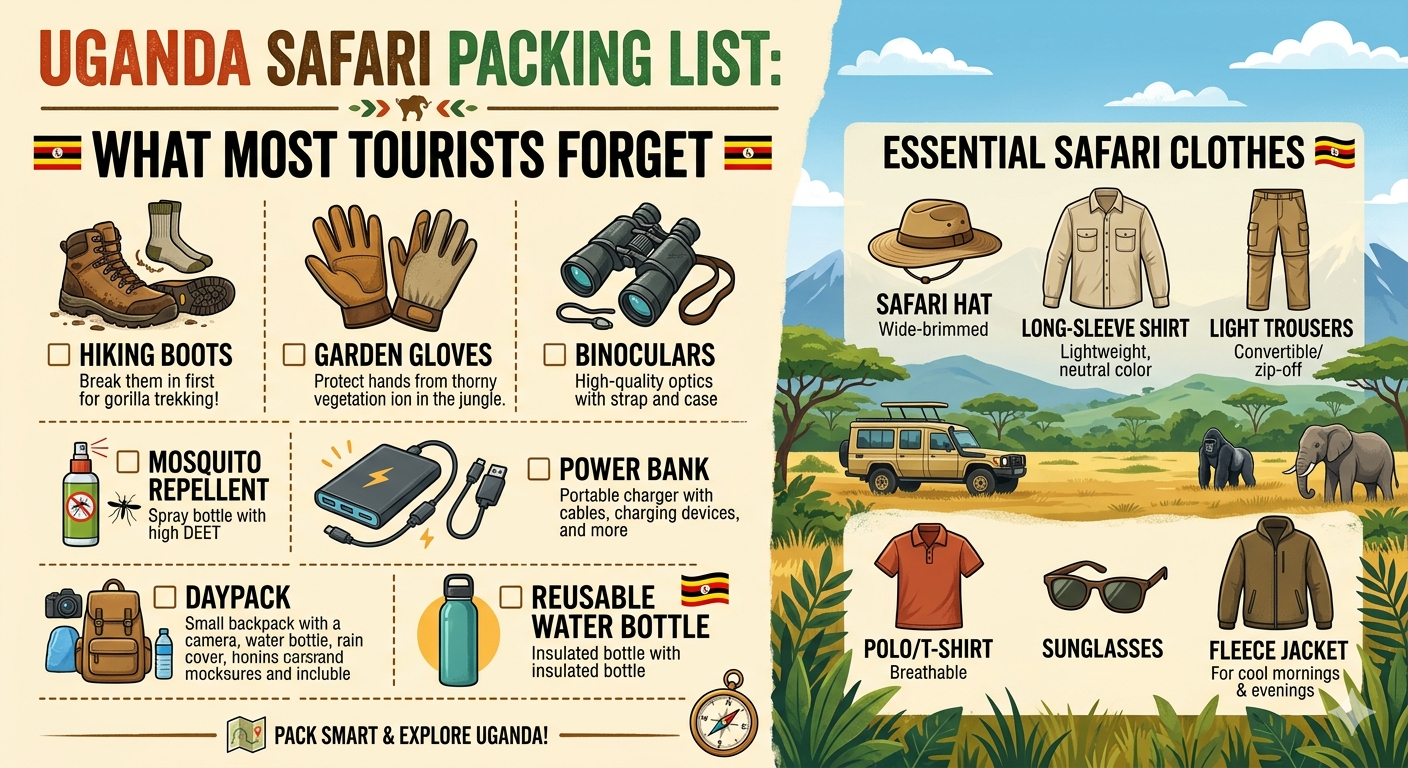
Long-sleeved shirts and lightweight trousers in neutral colors — khaki, olive, gray, and brown — are essential for all game drives and forest treks. Avoid black clothing in tsetse fly zones and bright colors that disturb wildlife or attract insects.
What most tourists forget is a quality fleece or light down jacket. Mornings in Bwindi Impenetrable Forest, the Rwenzori foothills, and even Kidepo Valley can be genuinely cold, particularly at altitude and before sunrise. Gorilla trekking can begin as early as 7:00 AM in chilly highland air, and many visitors shiver through their briefing in thin t-shirts, wishing they had packed an extra layer.
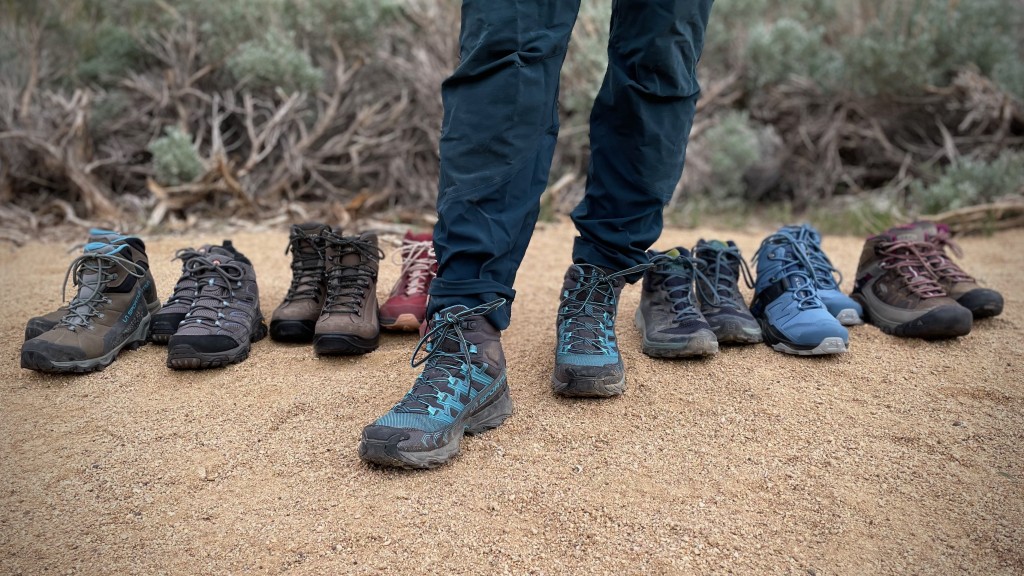
Also frequently forgotten are sturdy waterproof hiking boots with ankle support. Gorilla trekking involves steep, slippery, root-covered terrain that is demanding even in ideal conditions. Trainers and sandals are simply not adequate and can result in twisted ankles or an exhausting, uncomfortable trek. Break your boots in at home before travel — blisters on day one of a gorilla trek are a painful and avoidable mistake.
Finally, pack a lightweight waterproof rain jacket that compresses into its own pocket. Uganda receives rain year-round, and afternoon downpours arrive with very little warning. A quality packable rain jacket takes up virtually no space in your bag and will almost certainly be used.
The Forgotten Gear That Matters Most
Beyond clothing, there is a collection of practical items that experienced Uganda safari travellers never leave home without — yet first-timers consistently overlook.
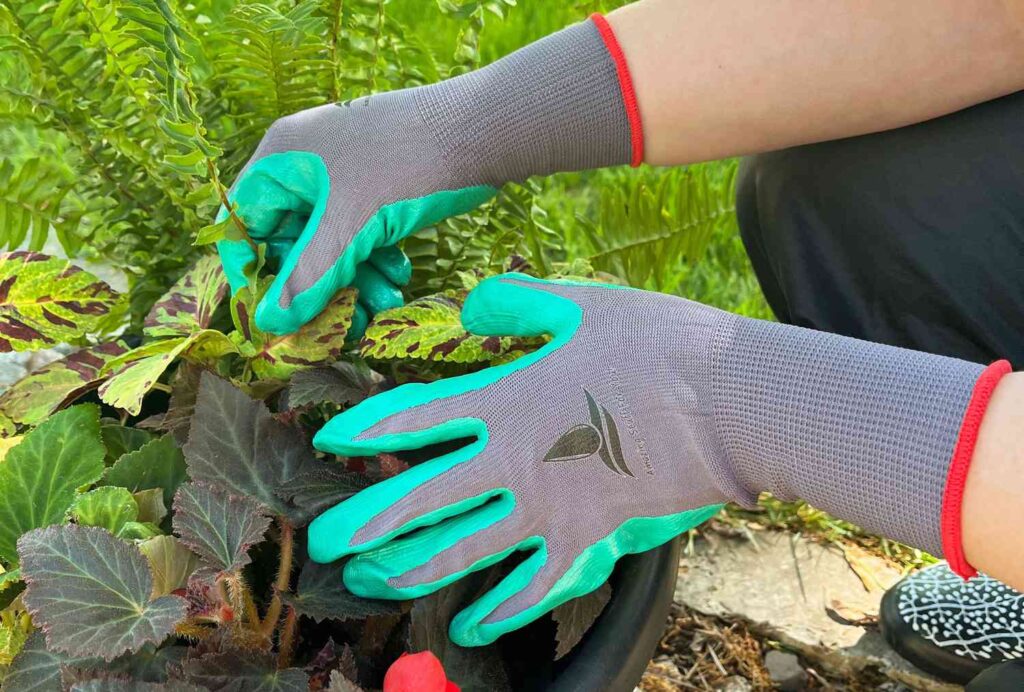
Garden gloves or lightweight trekking gloves are near the top of that list. During gorilla and chimpanzee trekking, you will grip vegetation, push through dense undergrowth, and sometimes use your hands to steady yourself on steep slopes. Gloves protect against stinging nettles, thorns, sharp grasses, and rough bark. Uganda Wildlife Authority rangers actually recommend them, yet the majority of first-time trekkers arrive without a pair.
Gaiters are another item that transforms a gorilla trek from an ordeal into a pleasure. These wrap around your lower leg and boot to keep mud, insects, safari ants, and debris out — and Uganda’s forest floors are rich in all of the above. Safari ants in particular can travel up inside trouser legs with uncomfortable speed.
Pack a dry bag or waterproof camera cover. Uganda’s unpredictable rain, river crossings, and high humidity present a genuine risk to cameras, phones, and electronics. A small roll-top dry bag costs very little and protects equipment that may cost thousands. Many tourists learn this lesson the hard way during an unexpected downpour on a game drive or boat cruise.
A head torch or headlamp with spare batteries is consistently overlooked yet consistently needed. Safari lodges in remote areas often have limited lighting, early morning activities begin before dawn, and any walk between accommodation tents or bandas after dark benefits enormously from a hands-free light source. Your phone torch is not an adequate substitute.
Health and Personal Care Essentials
This is where the gaps in most packing lists are most significant — and potentially most consequential.
High-strength insect repellent containing DEET is non-negotiable. Uganda is a malaria zone and mosquitoes are most active at dawn and dusk. Many tourists pack a low-strength repellent purchased at an airport and find it entirely inadequate for East African conditions. Carry a repellent with at least 30 to 50 percent DEET concentration and apply it consistently every evening without fail.

Most first-timers forget oral rehydration salts. Long game drives, high-altitude trekking, equatorial heat, and the physical demands of hiking combine to cause dehydration faster than most visitors expect. A supply of oral rehydration sachets, dissolved in water, is one of the simplest and most effective ways to recover energy and prevent fatigue in the field.
Blister plasters and a small personal first aid kit are worth their weight in gold on a gorilla trek, particularly if your boots are new. Include antiseptic wipes, adhesive bandages, pain relief, antihistamine tablets for insect reactions, and any personal prescription medications in quantities sufficient for your full trip — plus a few extra days as a buffer.
Pack your prescription medications in your carry-on luggage, never in checked baggage. Checked bags can be delayed or misdirected, and replacing prescription medication in rural Uganda is often impossible.
Practical Safari Items Most Tourists Leave Behind
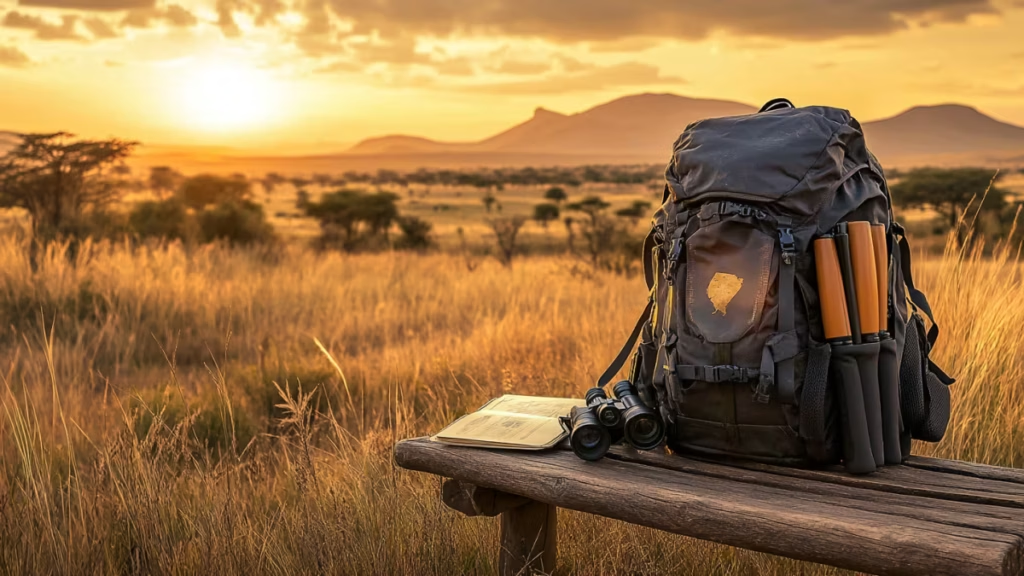
A small lightweight day pack is something a surprising number of visitors either forget or leave at home thinking their main bag will suffice. You need a compact, comfortable bag for gorilla treks, game drives, and day excursions — one that carries water, snacks, a rain jacket, sunscreen, camera gear, and documents without becoming a burden.
Snacks and high-energy foods are more important than most travellers anticipate. Long drives between Uganda’s parks can take eight hours or more, and roadside food options outside major towns are limited and unpredictable. Carry nuts, energy bars, dried fruit, and biscuits to sustain you between meals on long transfer days.
A reusable water bottle with a filter or purification tablets is both practical and environmentally responsible. Staying well-hydrated throughout a Uganda safari is essential, and reducing single-use plastic consumption matters in fragile ecosystem environments.
Do not forget a portable power bank. Safari lodges in remote areas often have limited charging facilities or generator power that runs only for set hours in the evening. A high-capacity power bank ensures your phone, camera, and other devices remain charged and ready for the day’s activities.
Finally, many first-time visitors overlook a pair of lightweight binoculars. Uganda’s birdlife alone — with over 1,060 recorded species — makes binoculars essential for any naturalist. They are equally invaluable for spotting distant wildlife on game drives across the wide savannas of Queen Elizabeth and Murchison Falls National Parks.
One Last Check Before You Zip Up
The difference between a comfortable, well-equipped Uganda safari and a frustrating, under-prepared one often comes down to a handful of items that take up very little space in your bag. Uganda’s environments are diverse, remote, and genuinely demanding — but they reward the visitor who arrives ready with experiences that no amount of planning can fully prepare you for.
At Rent A Driver Uganda, our experienced driver-guides are always on hand to offer practical advice and local knowledge before and during your safari. We want every client to arrive prepared, comfortable, and completely free to focus on the extraordinary wildlife and landscapes that make Uganda one of the greatest safari destinations on earth.
Plan your Uganda safari with confidence. Contact Rent A Driver Uganda today: Email: info@rentadriveruganda.com Phone / WhatsApp: +256-700135510