The Kenya Uganda Rwanda Triangle Self Drive Travel Guide
There is a particular kind of freedom that only arrives when you’re sitting behind the wheel of your own car, passport freshly stamped, a border you’ve just crossed shrinking in the rear view mirror. No group itinerary. No tour leader with a laminated schedule. No air-conditioned coach herding you from highlight to highlight. Just you, a map you only half-trust, and a road that the continent stretches out ahead in every shade of red, ochre, and green it can muster.
The Kenya–Uganda–Rwanda triangle is one of East Africa’s most rewarding self-drive routes — and one of its most underrated. It threads together three countries that share a colonial border history but almost nothing else: Kenya’s vast, chaotic energy; Uganda’s slow-burn warmth and impossible greenery; Rwanda’s striking, quietly disciplined beauty. Done independently — no agency middleman, no pre-booked convoy — the trip reveals a version of the region that tour groups simply cannot access.
Before You Leave Nairobi
Planning a multi-country self drive in East Africa requires legwork that most tourists outsource. Doing it yourself means confronting that legwork head-on — and being better for it.
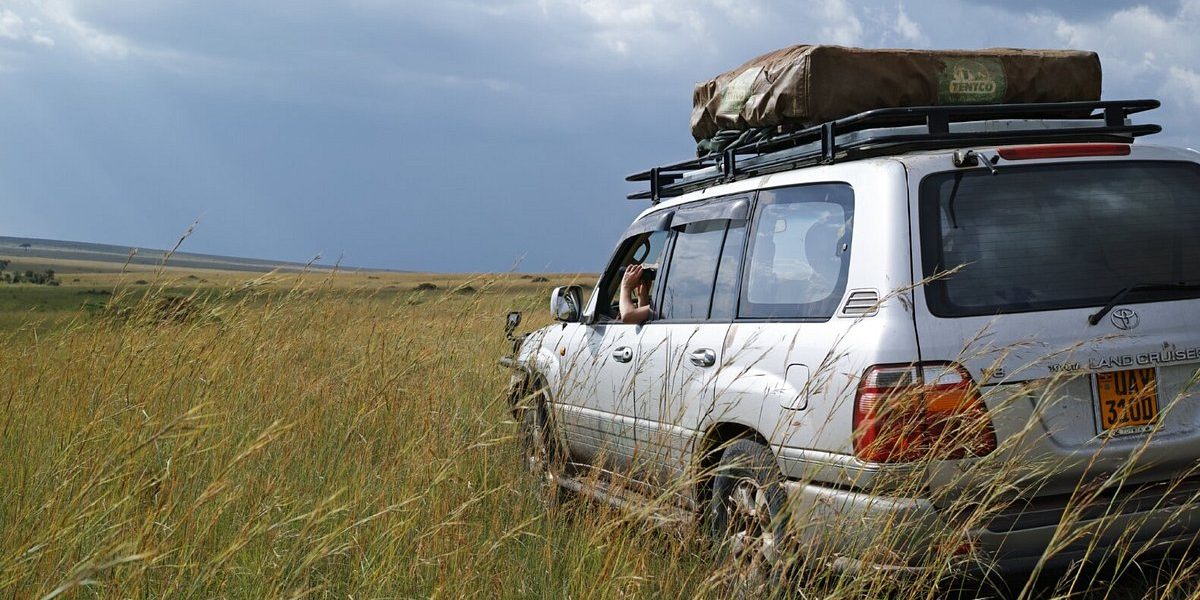
The most critical step is vehicle paperwork. If you’re driving a hired car across borders, your rental agency must provide a letter of authorization for each country you intend to enter, along with the vehicle’s logbook (registration document). Many Nairobi rental agencies are comfortable with the Uganda and Rwanda corridor, but confirm this explicitly before signing anything. Driving your own privately-owned Kenyan-registered car is equally possible but requires a COMESA (Common Market for Eastern and Southern Africa) Yellow Card — an insurance certificate recognized across member states — plus carnet documentation if you intend to stay more than a few weeks.
Beyond paperwork, the practical checklist is short but important: carry USD cash in small denominations (it remains the most universally accepted foreign currency at the borders), have your yellow fever vaccination certificate ready (mandatory for Uganda and Rwanda), download offline maps for all three countries, and pack a basic toolkit. A spare tyre is the obvious one, but a tow rope, jumper cables, and a jerry can of fuel have saved more East Africa road trippers than any travel insurance policy ever has.
One thing most first-timers miss: Rwanda switched from driving on the left to the right in 2009. The moment your front wheels cross the Rwandan border, you move to the right side of the road. It is not as disorienting as it sounds, but it warrants a conscious mental note before you depart Kampala.
Leg One: Nairobi to Kampala — The Long Opener
The drive from Nairobi to Kampala covers roughly 680 kilometres and, depending on how seriously you take the word “drive,” can be done in a punishing single day or a sensible two. The sensible version wins every time.
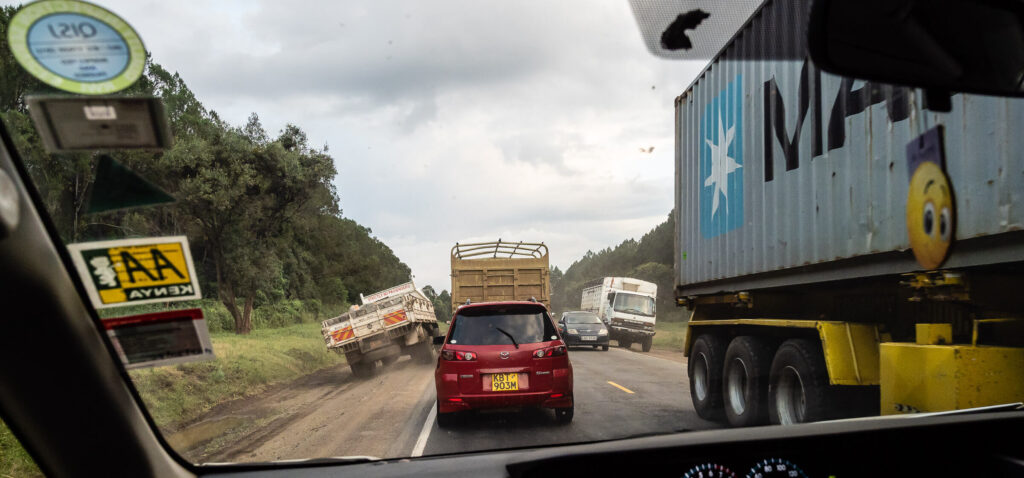
Leave Nairobi before 6am to beat the traffic that solidifies the city’s arteries by 7:30. Head northwest through Nakuru — worth a brief stop if flamingo season has turned Lake Nakuru pink — then continue to Kisumu on Lake Victoria’s eastern shore. This is your last major Kenyan city and a good overnight base. Kisumu has a genuine waterfront culture, excellent fresh tilapia pulled straight from the lake, and the kind of unhurried evening atmosphere that the capital never quite manages.
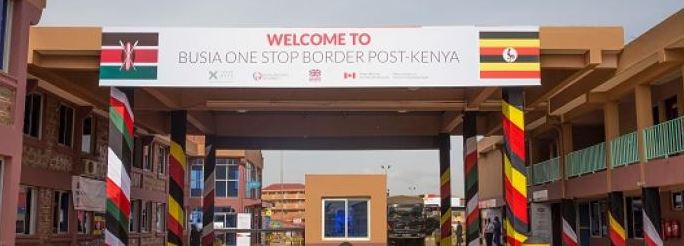
The Kenya–Uganda border at Busia or Malaba is where the trip becomes real. Busia is the more straightforward crossing for private vehicles; Malaba is busier but faster if you arrive early. At either crossing, expect two to three hours of queuing, counter-visiting, and form-filling if you haven’t pre-applied for a Uganda e-Visa — which you should have. It’s available online, takes a few business days to process, and cuts the border experience considerably.
Once across, Uganda greets you with a road surface that has improved dramatically since 2020 and a landscape that quietly drops the jaw. The approach to Kampala from the east runs through low hills thick with matoke plantations and small market towns, each one a sociable tangle of boda-bodas, roadside chapatti stalls, and schoolchildren in bright uniforms. Give yourself an extra hour for this stretch simply because you will stop — inevitably and happily — more than you planned.
Kampala: Two Days, Not One
Most independent travellers who arrive in Kampala planning to spend one night end up staying two. The city earns it. It sprawls across seven hills — now considerably more — with a density and noise level that is initially overwhelming and eventually, somehow, addictive.
The Uganda Museum on Kira Road is modest but genuinely excellent on the country’s per-colonial kingdoms. The Kasubi Tombs, a UNESCO World Heritage Site and burial ground for the Buganda kings, requires a guide but rewards the visit with something entirely different from the wildlife-and-landscape narrative that East Africa tourism usually defaults to. Owino Market — officially St. Balikuddembe Market — is the largest open-air market in East Africa: a dense, chaotic, astonishing place that makes every shopping mall in Nairobi feel faintly fraudulent.
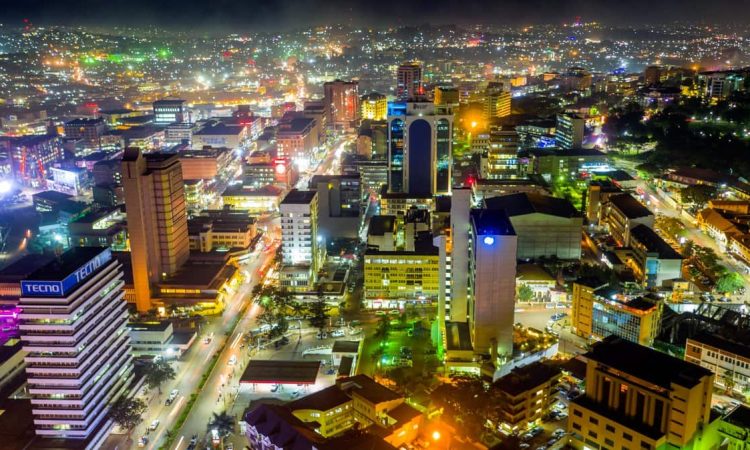
Evenings in Kampala belong to the Nakasero and Kololo neighbourhoods, where the bar and restaurant scene runs late and mixes Ugandan, Indian, and Lebanese influences in ways that will surprise anyone whose expectations were set by a Lonely Planet edition from ten years ago.
If your timing allows even a detour north to Murchison Falls National Park, take it. The falls themselves — where the Nile forces itself through a six-metres gap in the rock and drops 43 metres — are among the most viscerally impressive natural sights on the continent. The park’s game-viewing roads are manageable in a standard 4×4, and the boat trip to the base of the falls can be booked independently at the park gate without any agency involvement whatsoever.
Leg Two: Kampala to Kigali — The Hill Road
The drive southwest from Kampala to Kigali is approximately 540 kilometres and — road conditions permitting — takes seven to nine hours with border time included. It is, mile for mile, the most scenically concentrated stretch of the entire triangle.
The route passes through Masaka, then south through Mbarara, a bustling city worth stopping in for lunch and a general stretching of legs. From Mbarara, the road climbs toward the southwest, entering a region of rolling hills that grows increasingly dramatic the closer you get to Rwanda. Lake Mburo National Park sits just east of Mbarara and is one of Uganda’s most accessible parks — zebra, impala, hippo, and a surprising density of birdlife, reachable without a dedicated game drive and bookable at the gate.
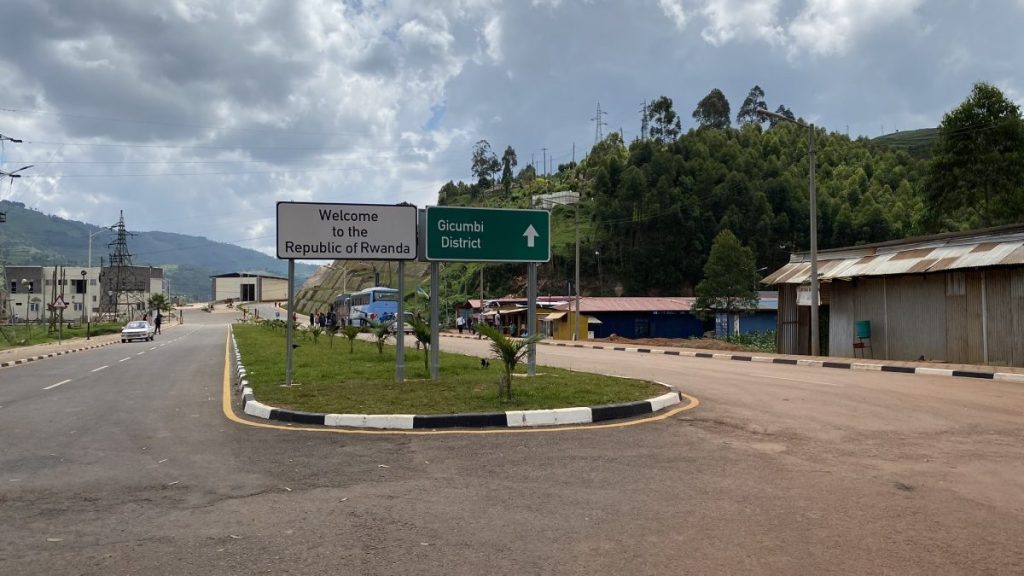
The Katuna/Gatuna border crossing between Uganda and Rwanda is the standard route for this leg and, relative to East African border crossings generally, is well-organized and efficient. Rwanda’s e-Visa system is among the slickest in Africa; have it sorted before arrival. And remember: once you cross, move to the right.
The road from the border to Kigali is the finest driving road of the entire trip. Smooth, winding through the Thousand Hills on perfectly engineered tarmac, with almost no litter, no potholes, and a landscape of terraced hillsides that looks tended by an extraordinarily patient hand. Rwanda enforces speed limits rigorously — cameras are real, fines are immediate, and the police are not interested in negotiation. Drive to the posted limit, always.
“Crossing from Uganda into Rwanda, the landscape shifts in a way that feels almost theatrical — the hills sharpen, the terracing becomes meticulous, and everything is startlingly, insistently clean.”
Kigali: The City That Makes You Rethink Things
Kigali is unlike any other African capital, and unlike most capitals anywhere. It is clean with a persistence that is almost eerie — plastic bags have been banned since 2008, and the national monthly cleaning day (Umuganda) means that on the last Saturday of every month, the entire country pauses for community service. The streets have the feel of a place that has decided, with considerable conviction, exactly what kind of city it wants to be.
The Kigali Genocide Memorial is an essential, harrowing, and ultimately hopeful visit. It documents the 1994 genocide against the Tutsi with unflinching honesty and without sensationalism, and the garden burial site where more than 250,000 victims are interred carries a weight that stays with you long after you leave the city. It is not comfortable. It is important.
Beyond the memorial, Kigali rewards wandering. The Kimironko Market is the city’s best — less touristy and more genuinely local than the craft markets near the hotel district. The Inema Arts Center in Kacyiru is a working studio and gallery showcasing contemporary Rwandan art that is vivid, politically engaged, and internationally unrecognized. Evenings on KN 5 Road, Kigali’s main social strip, offer a dining and bar scene that comfortably holds its own against Nairobi and Kampala.
The Gorillas, and the Question of When
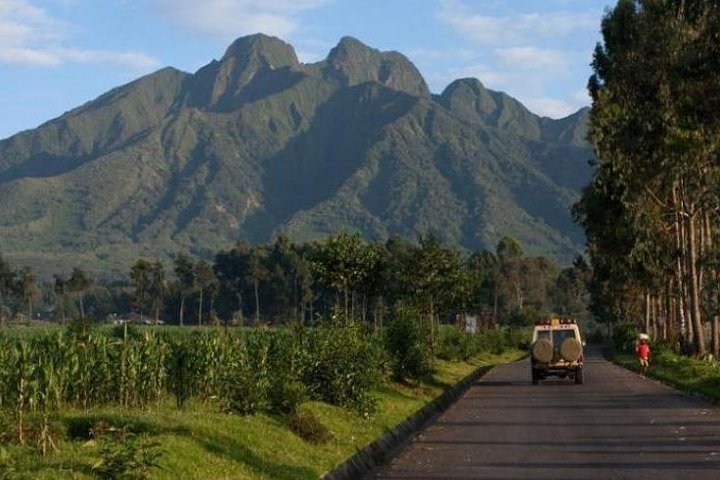
Rwanda’s mountain gorillas in Volcanoes National Park are, for many visitors, the primary reason for including Rwanda in any East Africa itinerary. They are extraordinary. Watching a silverback move through dense forest vegetation twenty metres away from you is a legitimately life-altering experience. But they come at a cost that requires planning: gorilla trekking permits in Rwanda cost USD 1,500 per person, per trek, and must be booked well in advance through the Rwanda Development Board. There is no walk-up availability.
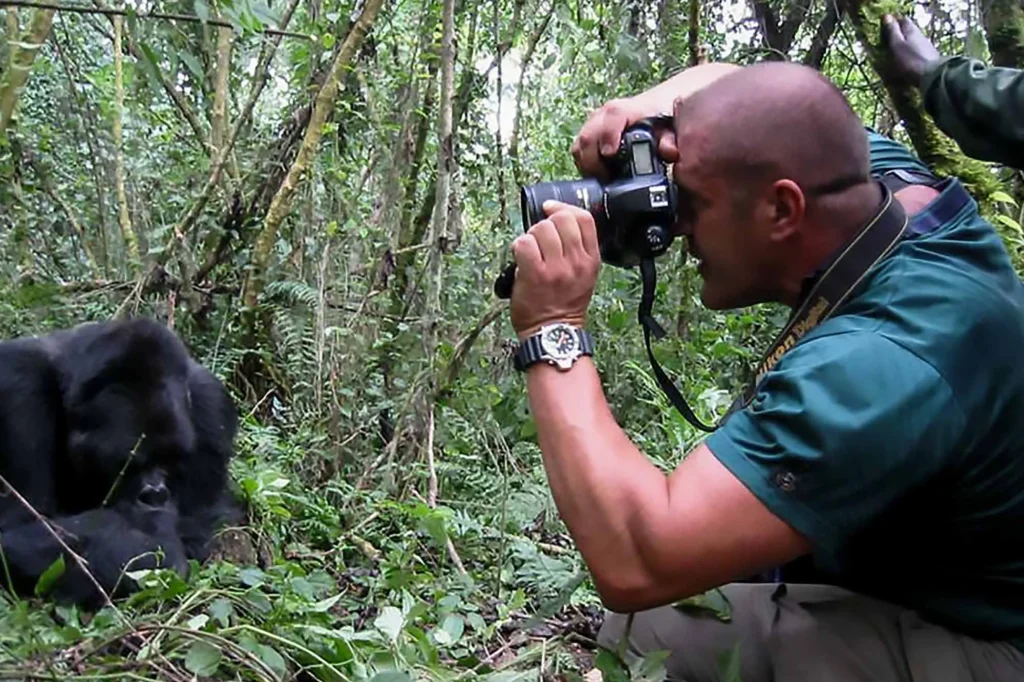
Uganda’s Bwindi Impenetrable Forest offers the same species at lower permit prices (USD 700–800 per person), which is why many independent travellers build in a Bwindi detour during the Kampala-to-Kigali leg. Bwindi is not on the direct route but lies within a reasonable deviation, and an overnight at one of the park’s community-run guesthouses allows an early morning trek departure. Booking must be done in advance through the Uganda Wildlife Authority.
The choice between the two is partly financial and partly philosophical. Rwanda’s experience is more curated — the infrastructure around Volcanoes is polished, the briefings are thorough, and the trek itself tends to be shorter and more managed. Bwindi is rawer, longer, muddier, and for many people, more memorable for exactly those reasons. If your budget accommodates only one, that decision will likely make itself.
Leg Three: Kigali Back to Nairobi
The return leg completes the triangle. The most direct route retraces the Kigali–Kampala road north, then cuts east through Uganda to the Kenyan border, rejoining the Nairobi highway. Alternatively, if time and ambition allow, a southern loop through Rwanda toward Tanzania before turning north back into Kenya adds several days but passes through extraordinary highland scenery and the less-visited western shores of Lake Kivu — one of Africa’s Great Lakes, and one of its least tourist.
Most independent drivers on the northern return route find the familiar roads move faster on the way back — partly because the border crossings are now old knowledge, partly because the route has shed its mystery and become, simply, the road. There is something mildly melancholy about this, and something satisfying too. You drove it into the unfamiliar. You drive it back as someone who knows the way.
What No Tour Group Will Show You
The honest case for doing this independently — the actual reason to bother with the paperwork and the border queues and the navigational improvisation — is access. Access to the roadside towns that no itinerary mentions. The chai stop in Masaka where the woman running it has been serving truck drivers since 1987 and knows more about the road ahead than any GPS. The unmarked viewpoint above Lake Victoria where you pull over because something in the light demands it and stand there for twenty minutes without anyone to hurry you along. The guesthouse in Mbarara run by a retired schoolteacher who gives you an unsolicited lecture on Ankole cattle heritage that turns out to be the most interesting conversation of the entire trip.
Tour groups are efficient. They are comfortable. They are, within their logic, excellent. But efficiency and the best kind of travel are not always the same thing. The Kenya–Uganda–Rwanda triangle, driven independently, gives you a landscape and a set of encounters that belong entirely to you — unrepeatable, unbookable, and worth every bureaucratic inconvenience it takes to get there.
Practical notes: Carry your yellow fever certificate at all borders. Use USD at crossings, then switch to local currency inside each country. Aim to reach overnight stops before dark — wildlife on roads is a real hazard in Kenya and Uganda. Get a local SIM in each country (Safaricom in Kenya, MTN in Uganda and Rwanda). And drive to the speed limit in Rwanda. Always.
Are you a travelers planning to an East Africa adventure and would love to rent a driver in Kenya, Uganda or Rwanda- we at Rent A Driver Uganda organize guided trips across all three countries for solo travelers, couples, families and small groups. You can contact us now by sending an email to info@rentadriveruganda.com / info@rentadriverkenya.com / info@rentadriverrwanda.com. Alter actively you can chat with us on +256-700135510.