What Is The Difference Between 4WD, 2WD & AWD?
If you’ve ever stood at a car dealership trying to decode drive-train acronyms — 4WD, AWD, FWD, RWD — you’re not alone. These terms are thrown around constantly, but they describe fundamentally different mechanical systems that affect how your vehicle performs, how much fuel it consumes, and what terrain it can handle. Understanding the distinctions can save you money, match a vehicle to your lifestyle, and prevent costly drive train damage.
Two-Wheel Drive: The Everyday Standard
Two-wheel drive (2WD) means the engine sends power to only two of the vehicle’s four wheels. This comes in two distinct flavors: front-wheel drive (FWD) and rear-wheel drive (RWD).
In a front-wheel drive system, the engine powers the front axle. The front wheels both steer and pull the car forward. This configuration is efficient, compact, and places the engine weight directly over the driven wheels, which improves traction in light rain and snow. The vast majority of everyday sedans, hatchbacks, and crossovers use FWD because it’s cost-effective to manufacture and keeps interior space maximized.
Rear-wheel drive sends power to the back axle instead. The front wheels handle steering, while the rear wheels do the pushing. RWD is favored for performance cars, trucks, and many luxury vehicles because it enables a better front-to-rear weight balance, smoother handling dynamics, and allows the engine compartment to be designed without the mechanical complexity of combining steering and drive in the same axle. The tradeoff is reduced traction in icy or snowy conditions — rear-wheel drive vehicles are notoriously prone to fishtailing on slippery roads.
For the average driver on paved roads in mild climates, 2WD is perfectly adequate and the most fuel-efficient option. You’re only spinning two wheels’ worth of drive train components, which means less mechanical resistance and better gas mileage.
Four-Wheel Drive: Built for the Wild
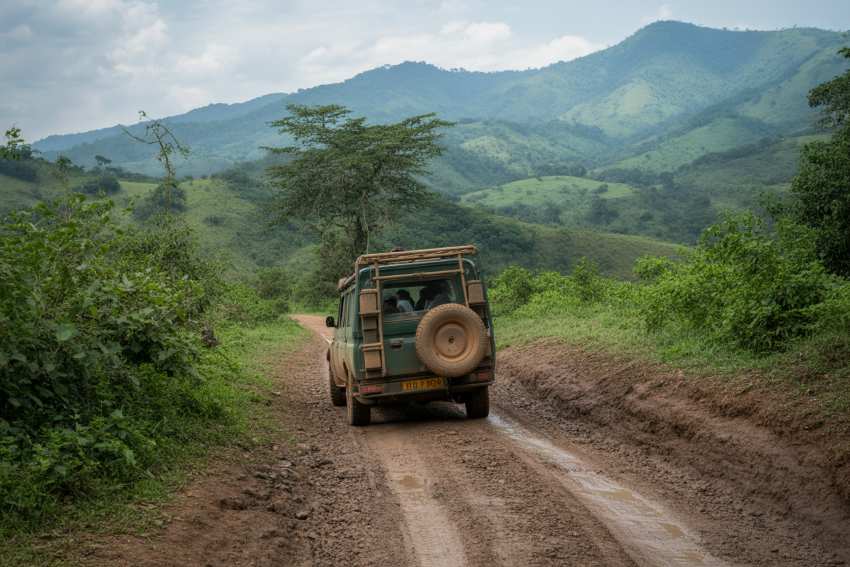
Four-wheel drive (4WD) — sometimes called 4×4 — was designed with serious off-road and heavy-duty use in mind. In a 4WD system, power is distributed to all four wheels simultaneously, but typically only when the driver manually engages it. Most 4WD systems include a transfer case, a secondary gearbox that splits torque between the front and rear axles.
A critical feature of traditional 4WD is the inclusion of low-range gearing (commonly called 4-Low or 4L). This gearing dramatically reduces speed while multiplying torque, giving vehicles the mechanical advantage needed to crawl over boulders, through deep mud, or up steep inclines. High-range 4WD (4H) is meant for more moderate off-road or low-traction situations at normal speeds.
The important caveat: most part-time 4WD systems lock the front and rear axles together at the same rotational speed. This is fine on loose, slippery surfaces where wheels can slip slightly, but on dry pavement it causes what’s called “drive train bind” — the mechanical tension that builds when the front and rear axles are forced to turn at the same speed through corners. Driving a locked 4WD system on dry pavement will stress your drive train, wear your tires rapidly, and can cause damage over time. This is why part-time 4WD is meant to be engaged only when conditions demand it, and disengaged the moment you’re back on normal roads.
Trucks, SUVs, and rugged off-roaders like the Jeep Wrangler and Toyota Land Cruiser typically employ this type of system.
All-Wheel Drive: Intelligent Traction for Everyone
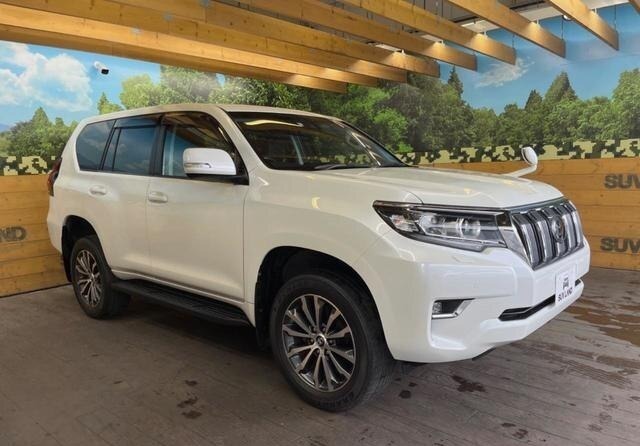
All-wheel drive (AWD) is the modern evolution of four-wheel traction, engineered primarily for on-road use and enhanced everyday grip rather than extreme off-roading. Unlike traditional 4WD, AWD systems are always active — the driver doesn’t need to flip a switch or pull a lever. Power is distributed to all four wheels continuously, or automatically redistributed between axles in response to traction conditions.
The sophistication of AWD lies in its differentials and electronic controls. Most contemporary AWD systems can send a larger percentage of torque to whichever wheels have the most grip, in real time. If your front left wheel starts spinning on a patch of ice, the system detects the slippage and redirects torque to the wheels that can actually use it. This happens seamlessly and instantaneously, often faster than any driver could react.
There are two major variants: full-time AWD, which constantly powers all four wheels, and on-demand AWD, which operates primarily in 2WD mode and engages the other axle only when slip is detected. On-demand systems are common in crossovers and provide better fuel economy during normal driving, while full-time AWD provides the most consistent traction at the cost of slightly higher fuel consumption.
AWD is an excellent choice for drivers in regions with regular rain, snow, or mixed road conditions who don’t need rock-crawling capability. It offers confidence-inspiring stability without requiring the driver to manage the system manually.
Choosing the Right System
The right drive train depends entirely on how and where you drive. For urban and suburban driving on paved roads, 2WD — particularly FWD — is efficient and practical. For those living in regions with heavy snowfall or frequently venturing onto unpaved roads, AWD offers a seamless traction advantage without complexity. And for drivers who genuinely venture off-road — crossing rivers, climbing loose dirt trails, or towing heavy loads through challenging terrain — a proper 4WD system with low-range gearing remains unmatched.
Understanding these differences means you’ll never pay for capability you don’t need, and you’ll never find yourself under-powered when the road disappears.
Ready to explore Uganda your way?, We offer a wide fleet of 4WD, 2WD, and AWD rental vehicles in Uganda— perfect for every road in Uganda, from city streets to rugged safari tracks. Simply contact us now by sending an email to info@rentadriveruganda.com or call us now on +256-700135510 to speak with the reservations team.